AG
ANT
Disaster Response Vehicle
Graduation project with TEMSA
Post Disaster Relief
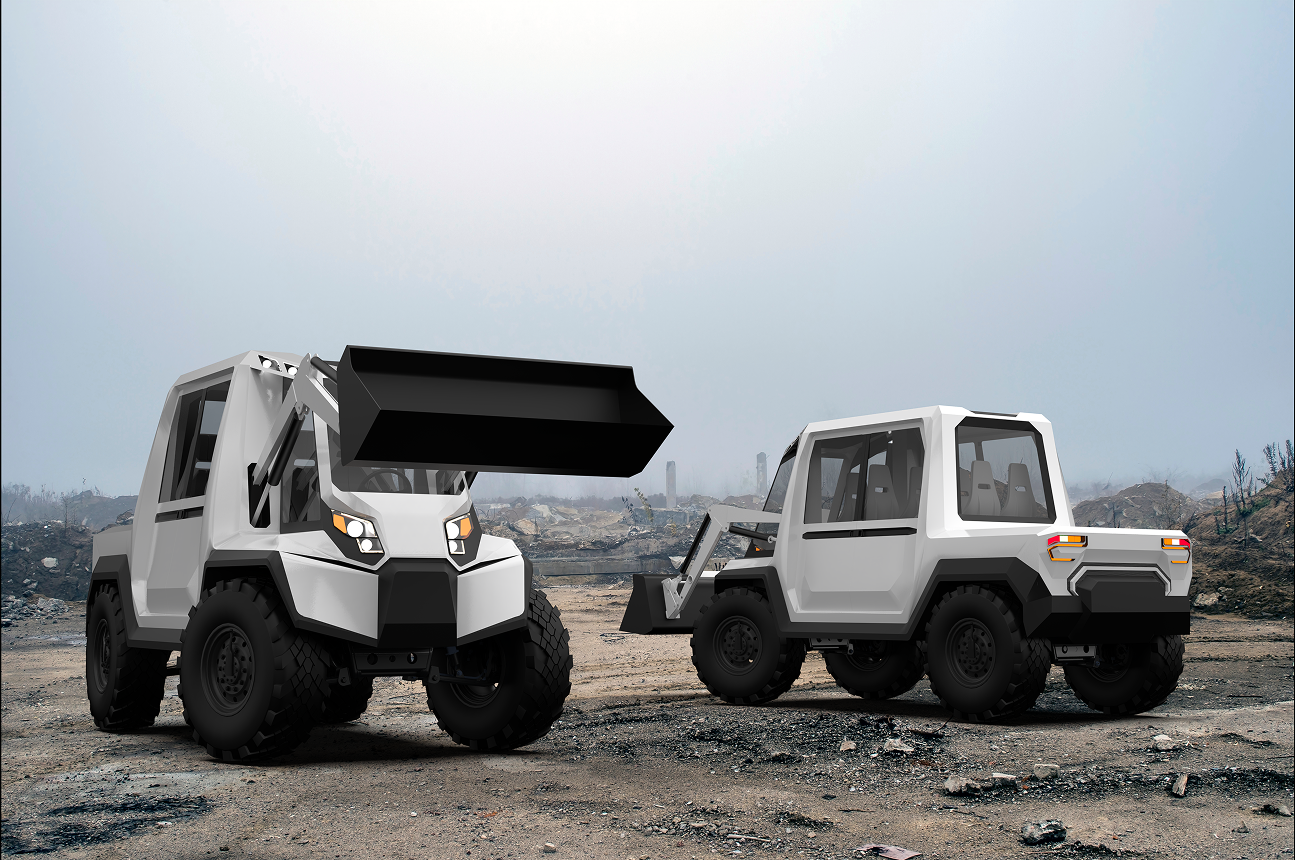
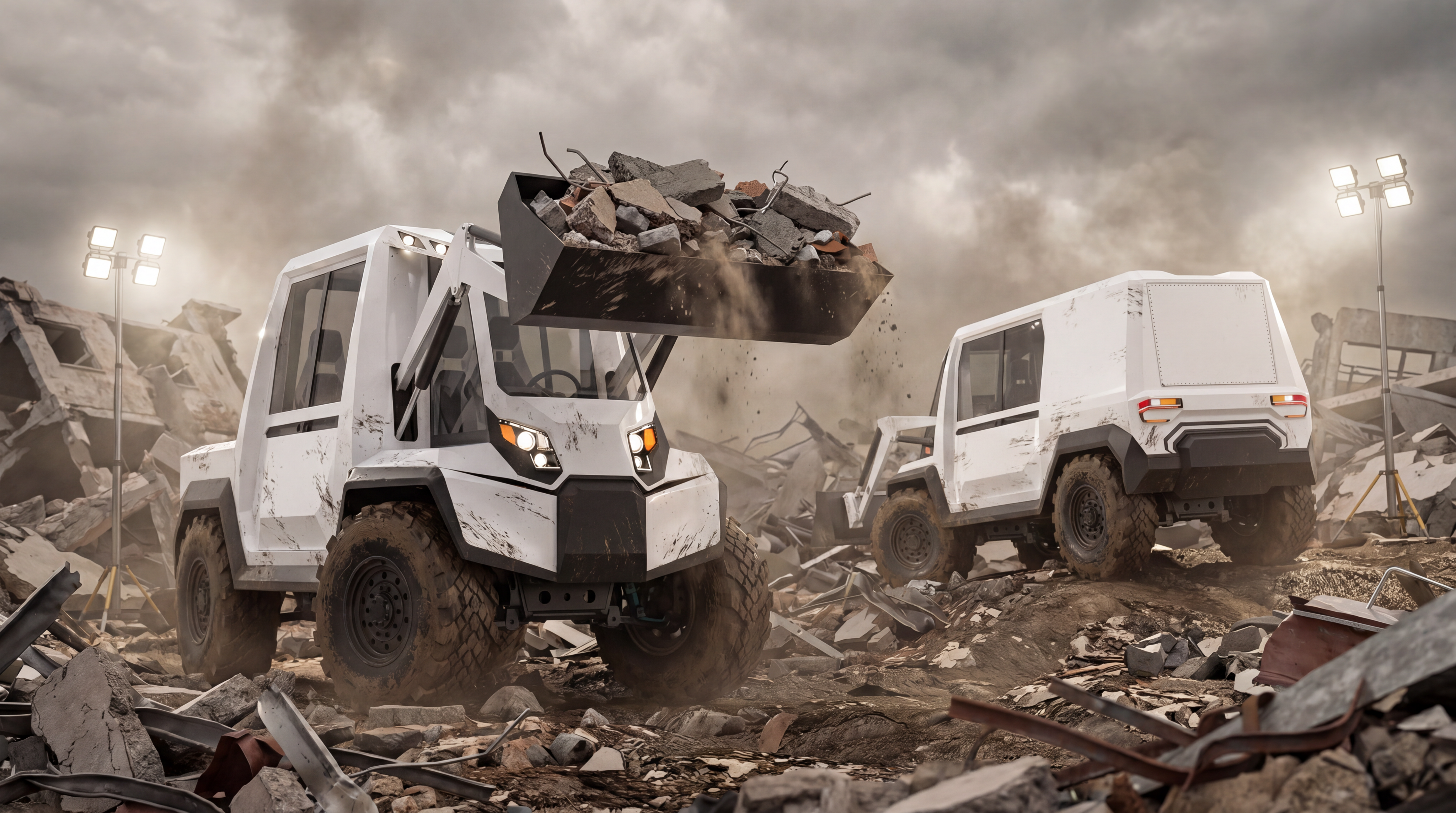
ANT is my METU graduation project, designed with guidance from TEMSA and research contributions from Turkey's National Gendarmerie. It's an all-terrain vehicle for disaster zones, where blocked and broken roads are often what stops rescue teams from reaching people. I ran field research with JAK, AKUT, AFAD, and fire departments to map where response actually breaks down, then designed a platform that clears its own path: a hybrid drivetrain, a hydraulic loader arm, and a cabin that reconfigures for different crew sizes. It merges the toughness of a tractor with the range of a truck.”
Process
Field research, user interviews, literature review
Sketch packaging explorations
Fusion 360 for modelling
FDM printing for prototyping
Sketching, Vizcom & Alias for revisions
Understanding Responders and issues
I ran field research and interviews with JAK, AKUT, AFAD, and municipal fire departments. Each branch operates under AFAD's central command but fights a different problem: fire crews contain the disaster, search-and-rescue teams look for people. What they shared was the same complaint; they could not get where they needed to be.
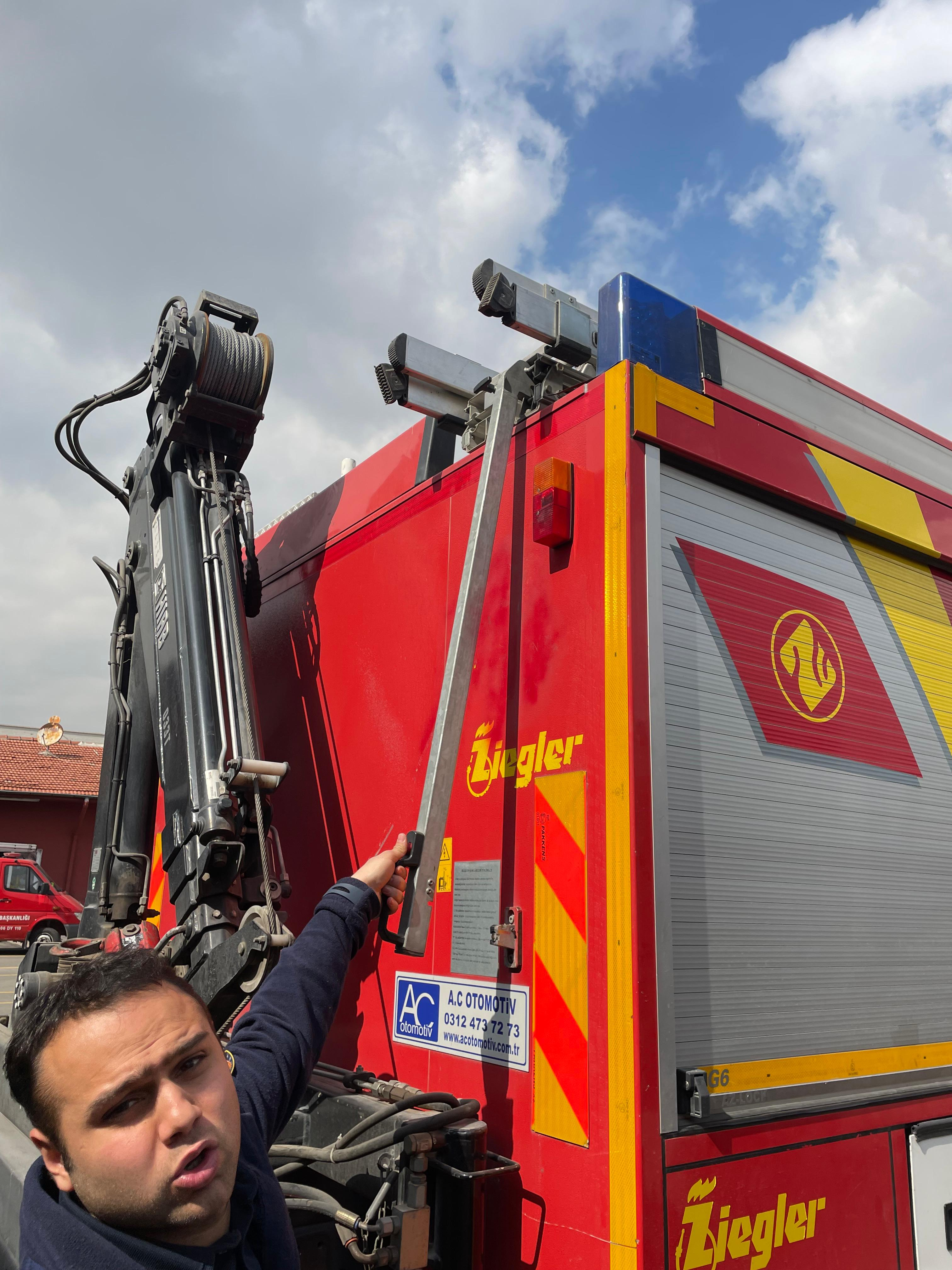
The organisations utilized every possible equipment available to get close to the scene. They sent their response trucks in convoys but they were faced with destroyed roads, some marched tens of kilometers with their equipments while the gendermarie sent A-130’s to the emergency airports filled with offroad vehicles. These airborn rescue units carried the responders and their equipments closer to the response scenes. Even civilian offroaders were called to the scene to get closer to the rubbles.
Rescue equipment
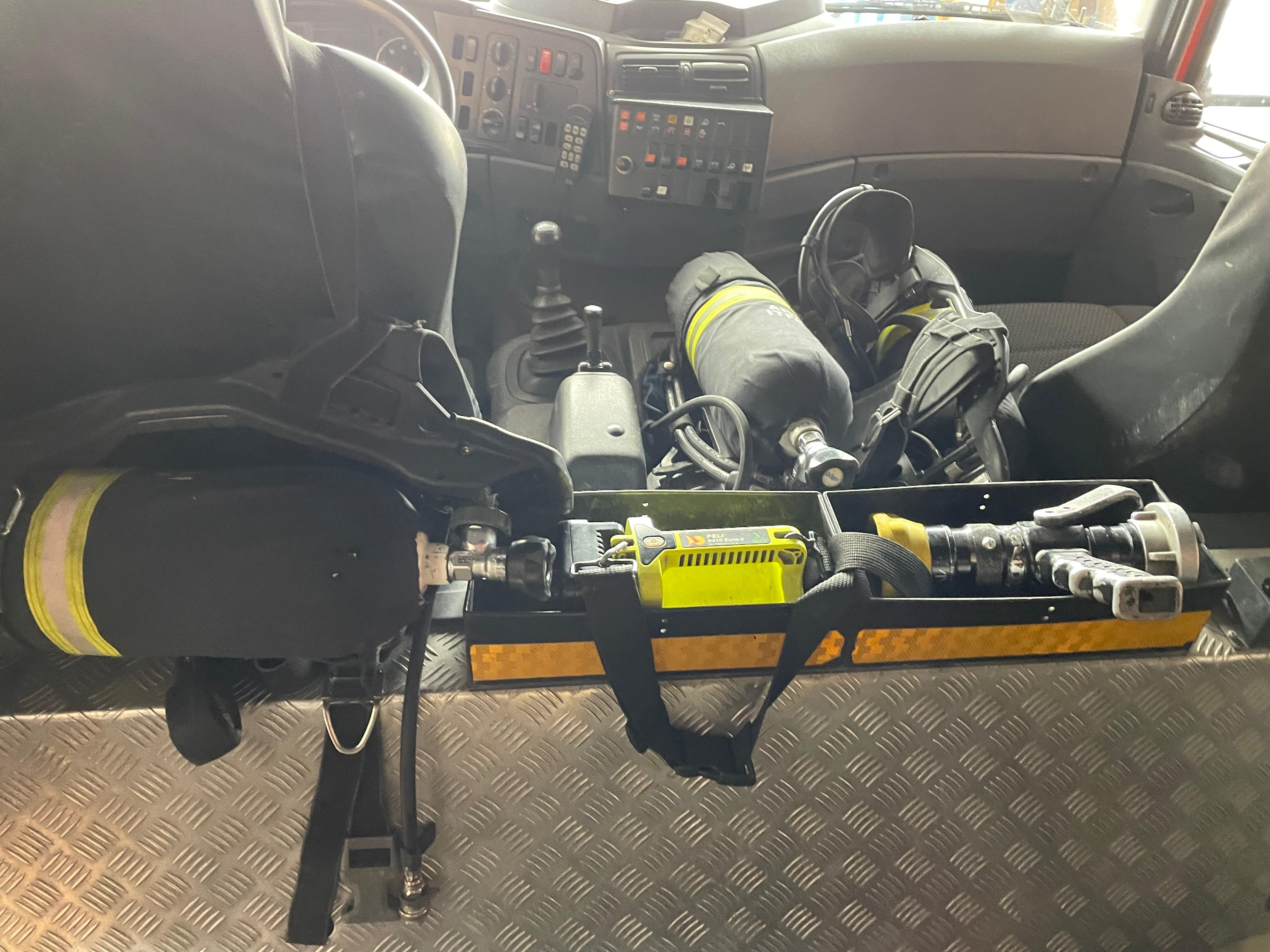
Each team utilizes different type of equipments, the equpments are of similar function at different levels. They require electricity and compressed air at the scene and the vehicles are retrofitted to provide those.
Inside the teams
The responders are worinkg in 3 person teams and one person on admin or commender dutie for communications. They get to the scene and disperse into 3 person groups, the more capable teams can disperse even further to command less experienced teams to cover more ground. 3+3+3 is the magic number, this way one team can manage and organize 9 teams in 9 different locations at the same time.
Exploring vehicle solutions
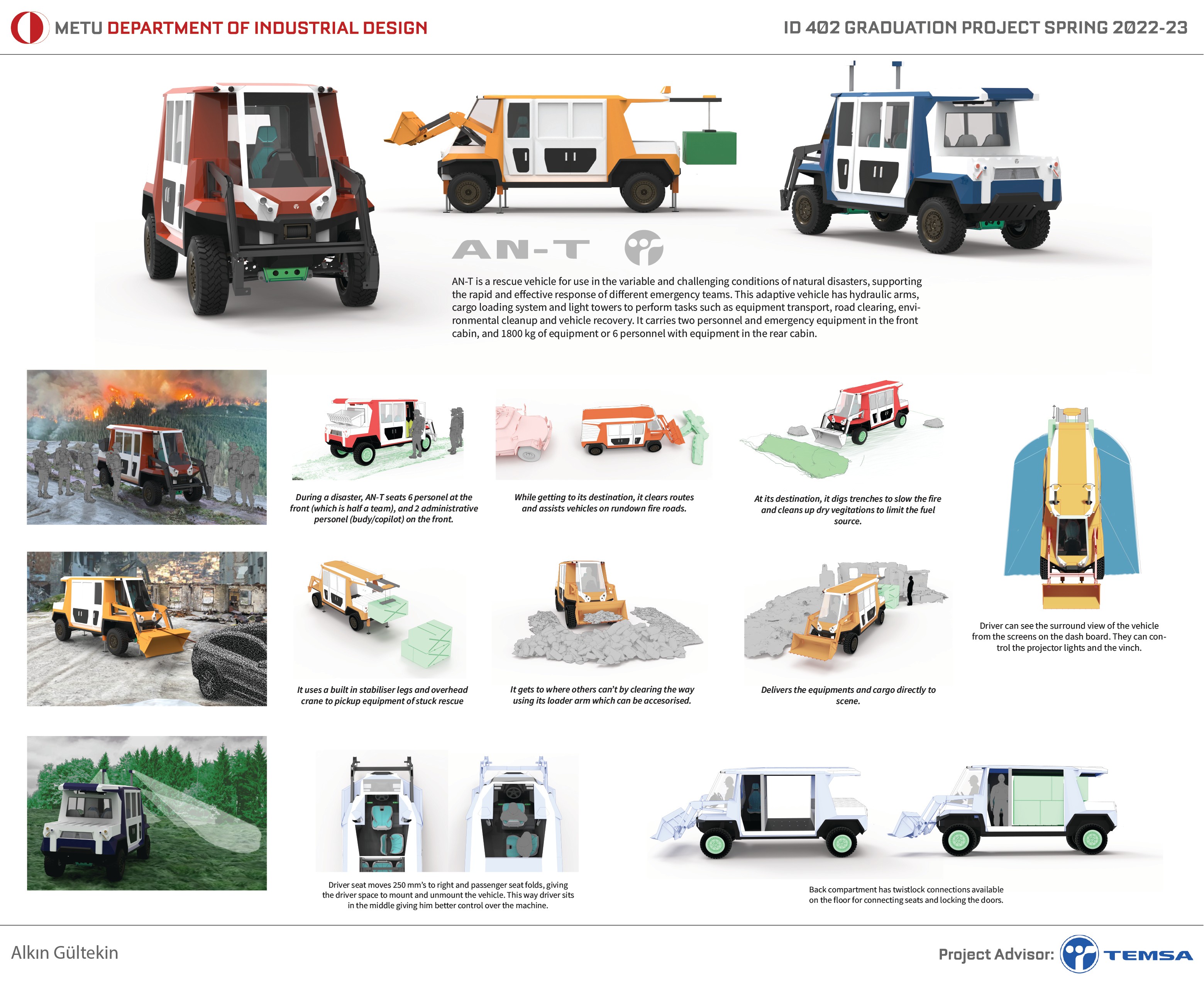
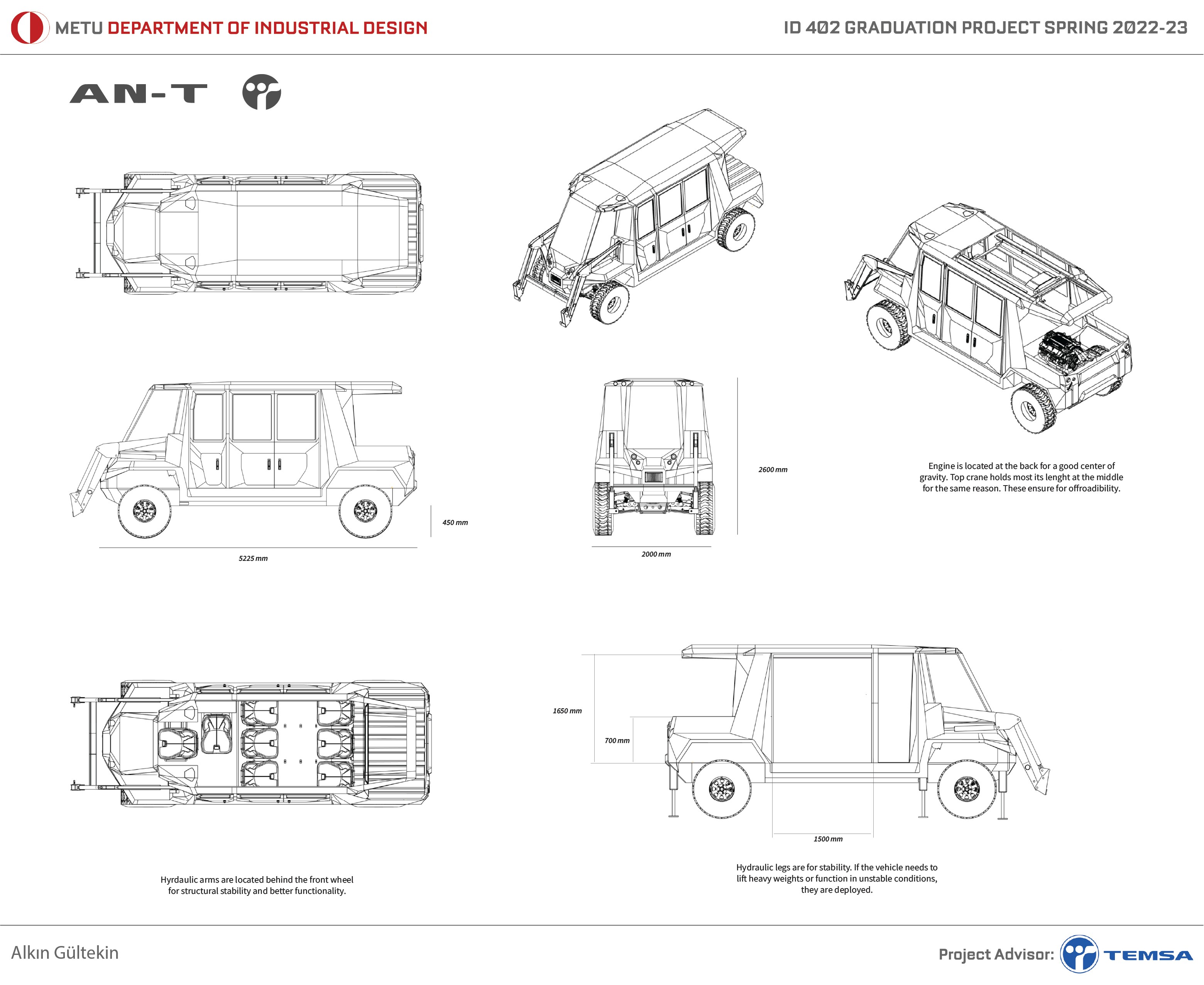
Final concept selected was the ANT, an ofroad utility vehicle capable of carrying personel and equipment. It has hydraulic capabilities supported with a diesel engine, it uses a front loader arm and stabilizer legs to clear the road and tow trapped vehicles.
The concept was deemed ideal by the Turkish Gendermarie Logistics Comanderie. Their engineers provided a report that would be usefull for further changes. Mainly the drivetrain and hydraulic capabilities.
What fits
Everything was sketched around the ease of access to the vehicle, the cargo amount in volume and ergonomical constraints.
What came on top
Final concept selected was the ANT, an ofroad utility vehicle capable of carrying personel and equipment. It has hydraulic capabilities supported with a diesel engine, it uses a front loader arm and stabilizer legs to clear the road and tow trapped vehicles.
The concept was deemed ideal by the Turkish Gendermarie Logistics Comanderie. Their engineers provided a report that would be usefull for further changes. Mainly the drivetrain and hydraulic capabilities.
The idea of what it should be
The design is made for offroad and repairibility, It is meant to be kept in possible disaster zones and airlifted if needed at another point.
Revising at free time
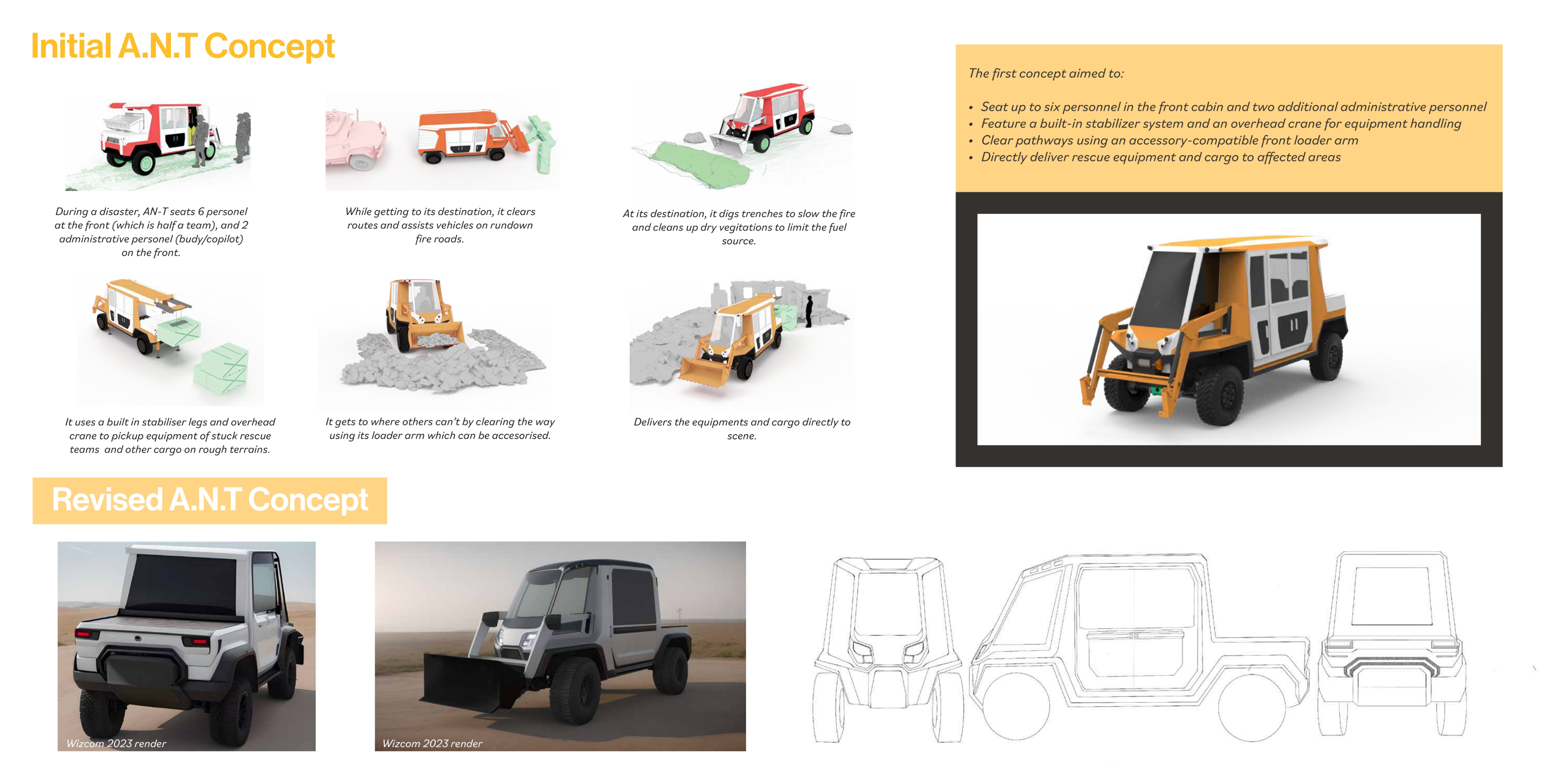
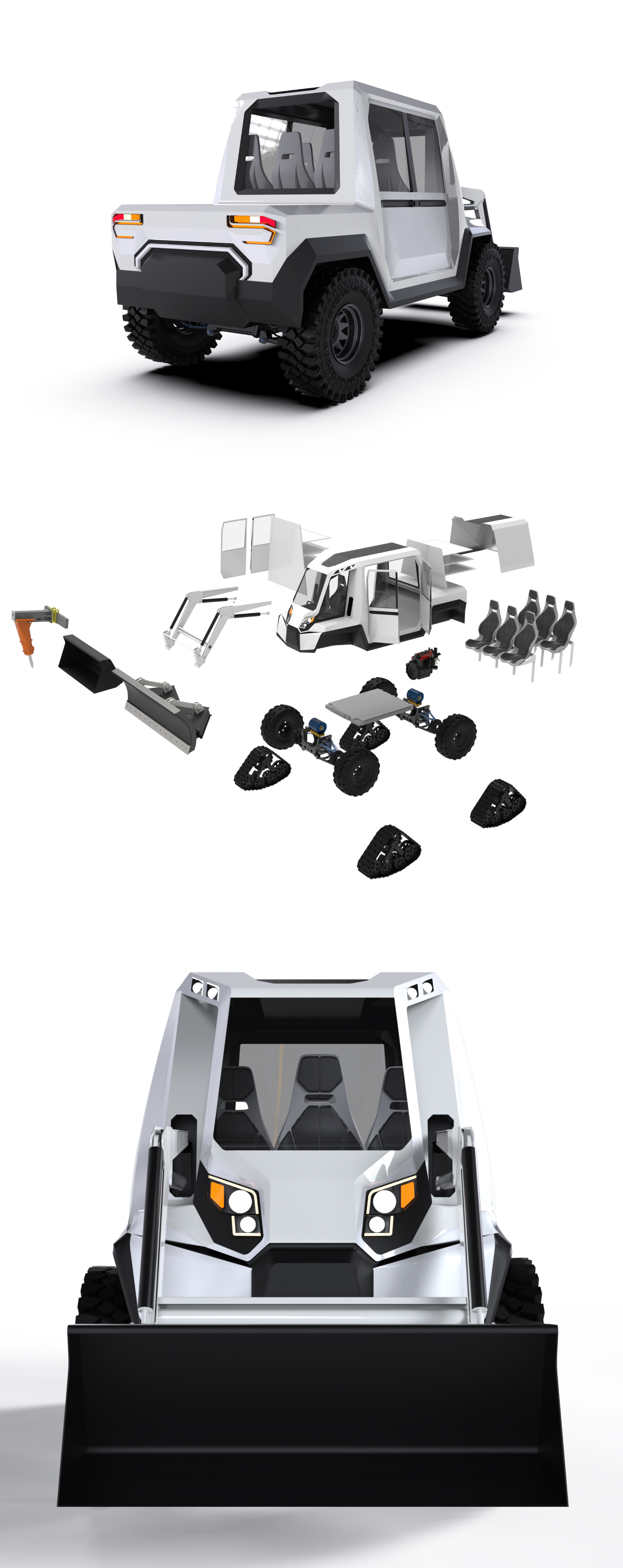
I removed the stabilizer legs as they would cause issues of maintanence in the long run and could be added as an external solution if needed. The loading arm was kept as it served an unique ability cruicial for sustained operation.
The design was changed to be able to host a hybrid system with two electric motors and a diesel engine serving as an auxilary power source for electricity and hydraulics.
Straight surfaces
Surfaces are kept as simple as possible as if produced it would have an extremely low number of units and would require field corrections during use. The straight surfaces also allow teams to strap even more gear if wanted.
Get where you are needed
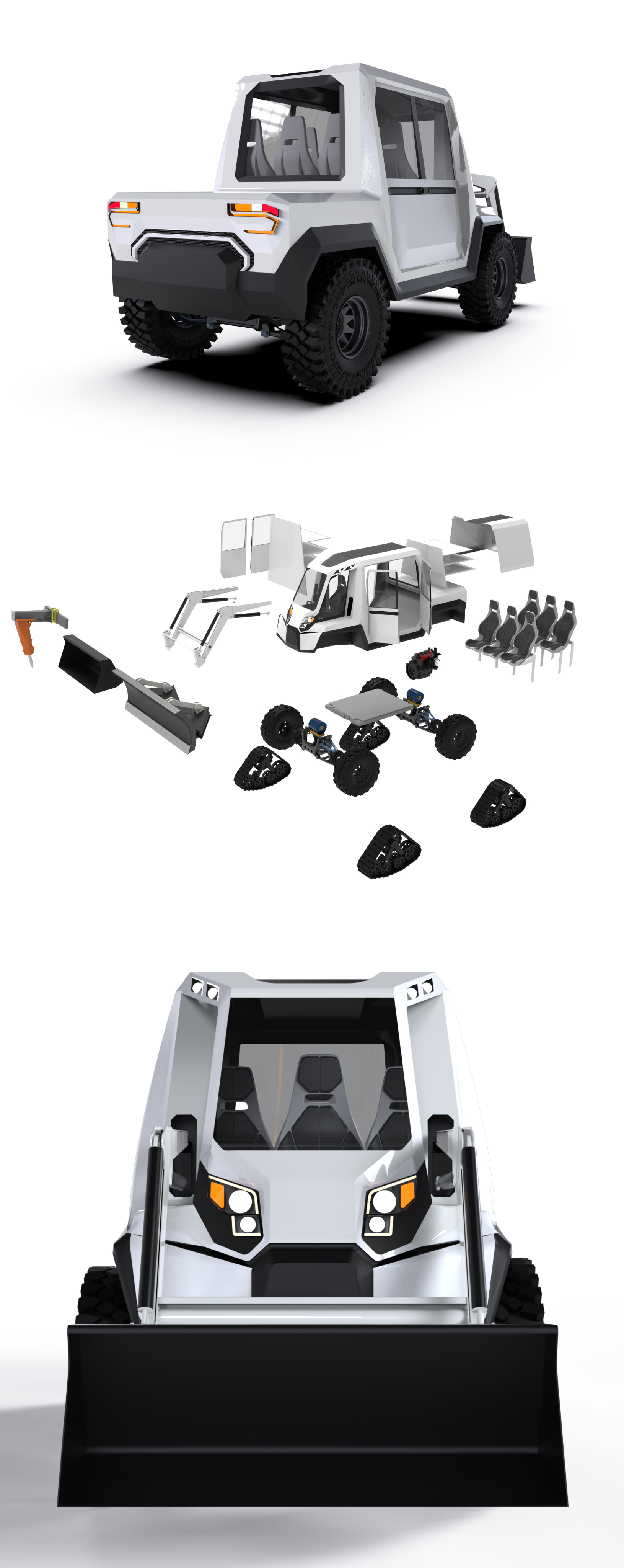
Surfaces are kept as simple as possible as if produced it would have an extremely low number of units and would require field corrections during use. The straight surfaces also allow teams to strap even more gear if wanted.
Social
Contact
+32 479079811
+90 5319246802
alkingultekin@gmail.com
Current Locations
1040 Brussels
34710 Istanbul
16130 Bursa
AG
ANT
Disaster Response Vehicle
Graduation project with TEMSA
Post Disaster Relief
ANT is my METU graduation project, designed with guidance from TEMSA and research contributions from Turkey's National Gendarmerie. It's an all-terrain vehicle for disaster zones, where blocked and broken roads are often what stops rescue teams from reaching people. I ran field research with JAK, AKUT, AFAD, and fire departments to map where response actually breaks down, then designed a platform that clears its own path: a hybrid drivetrain, a hydraulic loader arm, and a cabin that reconfigures for different crew sizes. It merges the toughness of a tractor with the range of a truck.”
Process
Field research, user interviews, literature review
Sketch packaging explorations
Fusion 360 for modelling
FDM printing for prototyping
Sketching, Vizcom & Alias for revisions
Understanding Responders and issues
I ran field research and interviews with JAK, AKUT, AFAD, and municipal fire departments. Each branch operates under AFAD's central command but fights a different problem: fire crews contain the disaster, search-and-rescue teams look for people. What they shared was the same complaint; they could not get where they needed to be.
The organisations utilized every possible equipment available to get close to the scene. They sent their response trucks in convoys but they were faced with destroyed roads, some marched tens of kilometers with their equipments while the gendermarie sent A-130’s to the emergency airports filled with offroad vehicles. These airborn rescue units carried the responders and their equipments closer to the response scenes. Even civilian offroaders were called to the scene to get closer to the rubbles.
Rescue equipment
Each team utilizes different type of equipments, the equpments are of similar function at different levels. They require electricity and compressed air at the scene and the vehicles are retrofitted to provide those.
Inside the teams
The responders are worinkg in 3 person teams and one person on admin or commender dutie for communications. They get to the scene and disperse into 3 person groups, the more capable teams can disperse even further to command less experienced teams to cover more ground. 3+3+3 is the magic number, this way one team can manage and organize 9 teams in 9 different locations at the same time.
Exploring vehicle solutions
Final concept selected was the ANT, an ofroad utility vehicle capable of carrying personel and equipment. It has hydraulic capabilities supported with a diesel engine, it uses a front loader arm and stabilizer legs to clear the road and tow trapped vehicles.
The concept was deemed ideal by the Turkish Gendermarie Logistics Comanderie. Their engineers provided a report that would be usefull for further changes. Mainly the drivetrain and hydraulic capabilities.
What came on top
Final concept selected was the ANT, an ofroad utility vehicle capable of carrying personel and equipment. It has hydraulic capabilities supported with a diesel engine, it uses a front loader arm and stabilizer legs to clear the road and tow trapped vehicles.
The concept was deemed ideal by the Turkish Gendermarie Logistics Comanderie. Their engineers provided a report that would be usefull for further changes. Mainly the drivetrain and hydraulic capabilities.
What fits
Everything was sketched around the ease of access to the vehicle, the cargo amount in volume and ergonomical constraints.
The idea of what it should be
The design is made for offroad and repairibility, It is meant to be kept in possible disaster zones and airlifted if needed at another point.
Revising at free time
I removed the stabilizer legs as they would cause issues of maintanence in the long run and could be added as an external solution if needed. The loading arm was kept as it served an unique ability cruicial for sustained operation.
The design was changed to be able to host a hybrid system with two electric motors and a diesel engine serving as an auxilary power source for electricity and hydraulics.
Straight surfaces
Surfaces are kept as simple as possible as if produced it would have an extremely low number of units and would require field corrections during use. The straight surfaces also allow teams to strap even more gear if wanted.
Get where you are needed
The initial concept seated six in the front cabin with an overhead crane and stabiliser legs. After advisory board review, the revised design moved the operator to a front-centre seat with lateral travel, opened the cabin for modular seating, and added enhanced lighting for low-visibility work.
Social
Contact
+32 479079811
+90 5319246802
alkingultekin@gmail.com
Current Locations
1040 Brussels
34710 Istanbul
16130 Bursa
ANT Disaster Response Vehicle
Graduation project with TEMSA
Post Disaster Relief
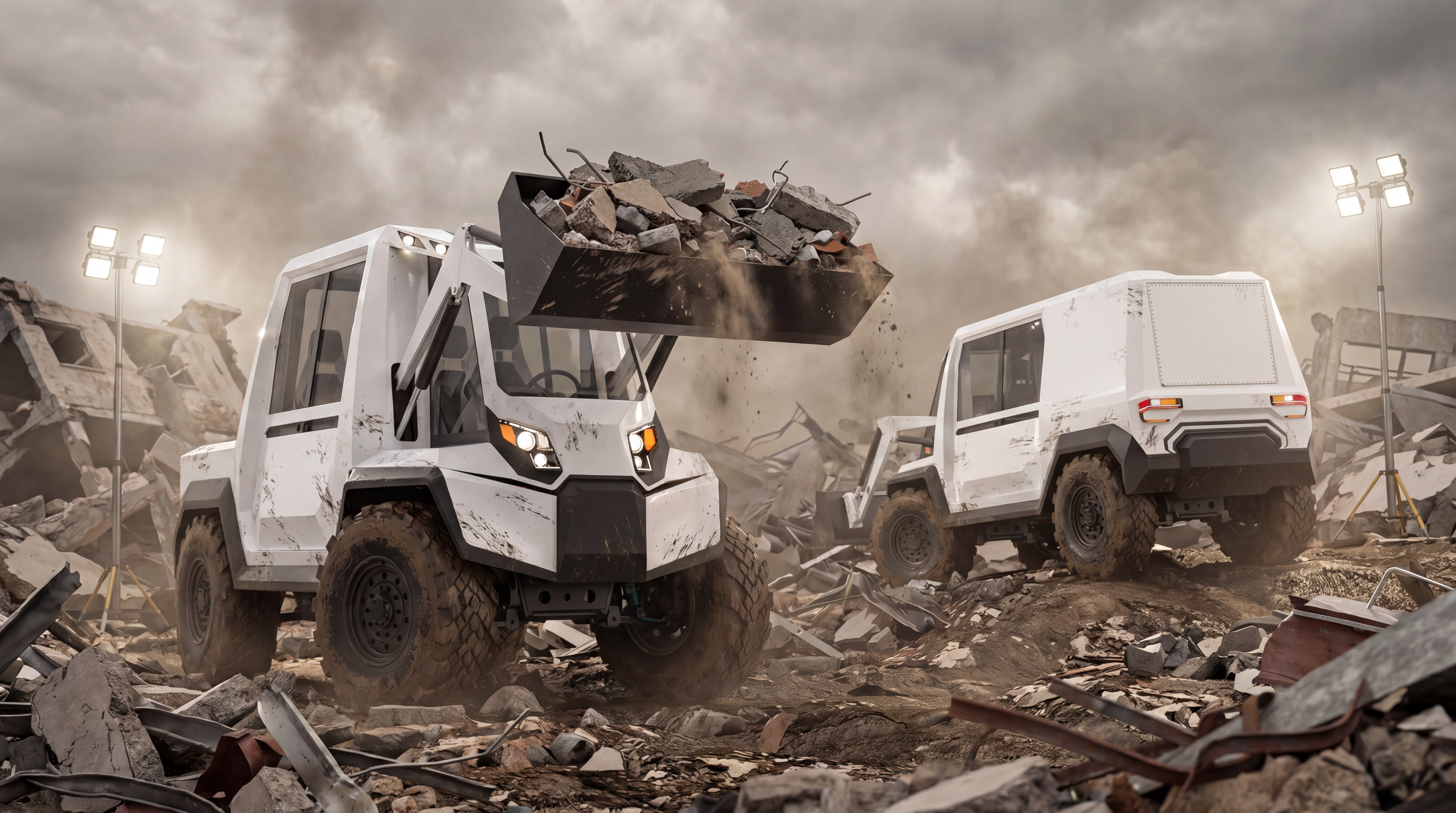
ANT is my METU graduation project, designed with guidance from TEMSA and research contributions from Turkey's National Gendarmerie. It's an all-terrain vehicle for disaster zones, where blocked and broken roads are often what stops rescue teams from reaching people. I ran field research with JAK, AKUT, AFAD, and fire departments to map where response actually breaks down, then designed a platform that clears its own path: a hybrid drivetrain, a hydraulic loader arm, and a cabin that reconfigures for different crew sizes. It merges the toughness of a tractor with the range of a truck.”
Process
Field research, user interviews, literature review
Sketch packaging explorations
Fusion 360 for modelling
FDM printing for prototyping
Sketching, Vizcom & Alias for revisions
Understanding Responders and issues
I ran field research and interviews with JAK, AKUT, AFAD, and municipal fire departments. Each branch operates under AFAD's central command but fights a different problem: fire crews contain the disaster, search-and-rescue teams look for people. What they shared was the same complaint; they could not get where they needed to be.
The organisations utilized every possible equipment available to get close to the scene. They sent their response trucks in convoys but they were faced with destroyed roads, some marched tens of kilometers with their equipments while the gendermarie sent A-130’s to the emergency airports filled with offroad vehicles. These airborn rescue units carried the responders and their equipments closer to the response scenes. Even civilian offroaders were called to the scene to get closer to the rubbles.
Rescue equipment
Each team utilizes different type of equipments, the equpments are of similar function at different levels. They require electricity and compressed air at the scene and the vehicles are retrofitted to provide those.
Inside the teams
The responders are worinkg in 3 person teams and one person on admin or commender dutie for communications. They get to the scene and disperse into 3 person groups, the more capable teams can disperse even further to command less experienced teams to cover more ground. 3+3+3 is the magic number, this way one team can manage and organize 9 teams in 9 different locations at the same time.
Exploring possible vehicle solutions
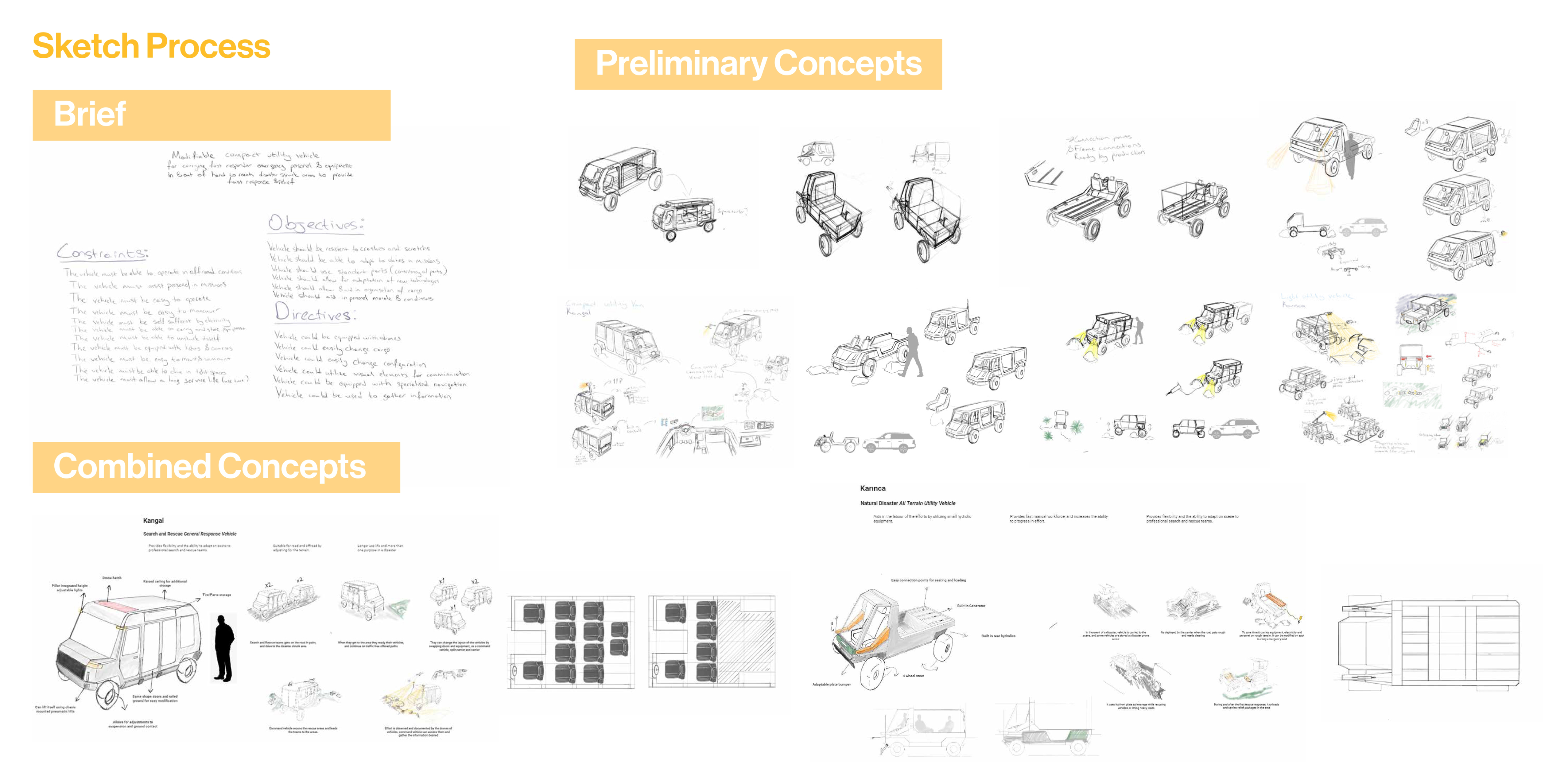
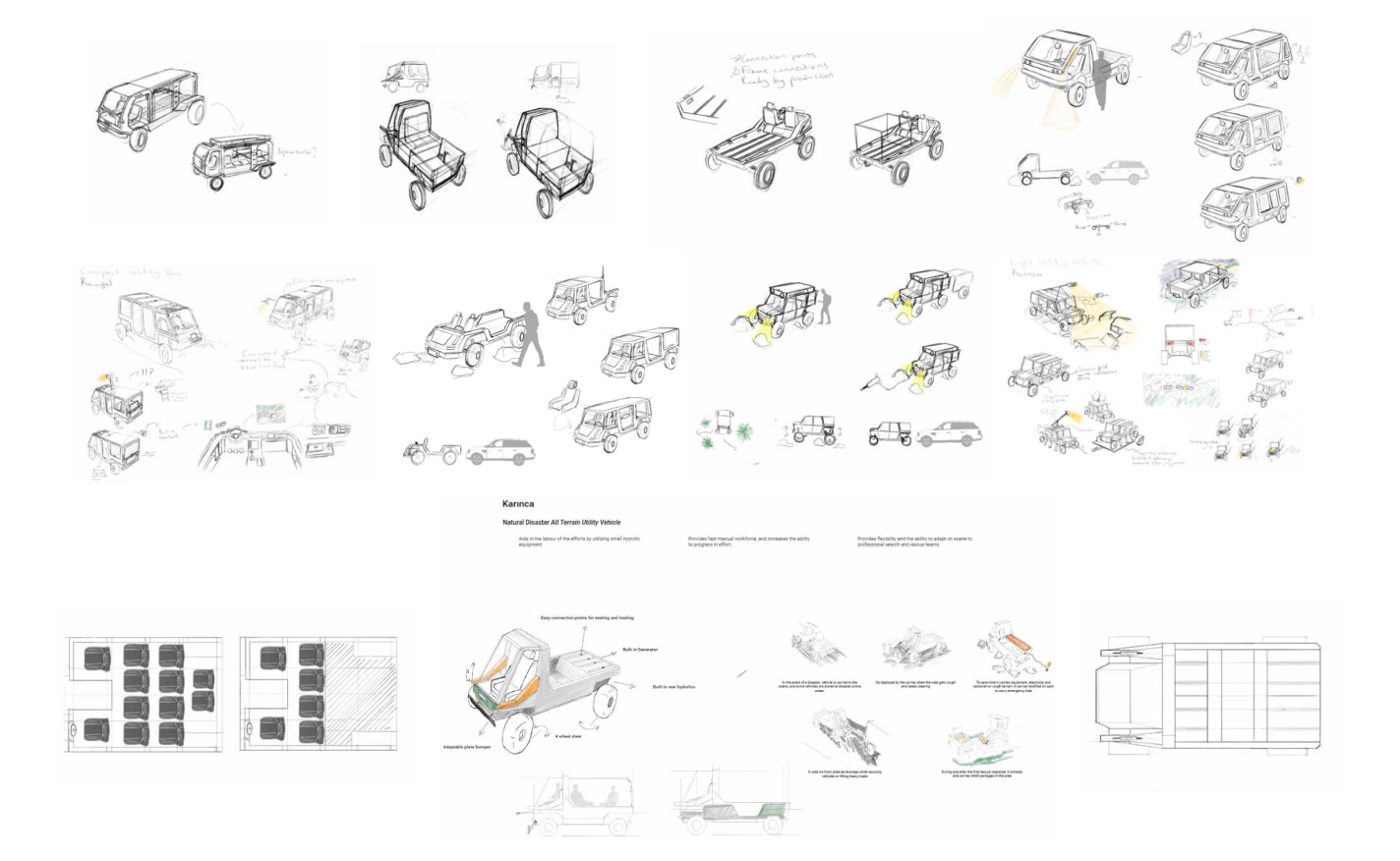
There are a lot of possible approaches for a vehicle platform while the constraints are clear. After function based explorations, i switched to packaging sketches for the selected solutions.
Light exploration vehicle, An ofroad van, A ant like vehicle were chosen from the concepts by the advisor for further explorations. They were lo-fi modeled to have dimensional conversations, and Ant concept was chosen to be an hybrid with the offroad van solution.
What fits
Everything was sketched around the ease of access to the vehicle, the cargo amount in volume and ergonomical constraints.
What came on top
Final concept selected was the ANT, an ofroad utility vehicle capable of carrying personel and equipment. It has hydraulic capabilities supported with a diesel engine, it uses a front loader arm and stabilizer legs to clear the road and tow trapped vehicles.
The concept was deemed ideal by the Turkish Gendermarie Logistics Comanderie. Their engineers provided a report that would be usefull for further changes. Mainly the drivetrain and hydraulic capabilities.
The idea of what it should be
The design is made for offroad and repairibility, It is meant to be kept in possible disaster zones and airlifted if needed at another point.
Revising at free time
I removed the stabilizer legs as they would cause issues of maintanence in the long run and could be added as an external solution if needed. The loading arm was kept as it served an unique ability cruicial for sustained operation.
The design was changed to be able to host a hybrid system with two electric motors and a diesel engine serving as an auxilary power source for electricity and hydraulics.
Straight surfaces
Surfaces are kept as simple as possible as if produced it would have an extremely low number of units and would require field corrections during use. The straight surfaces also allow teams to strap even more gear if wanted.
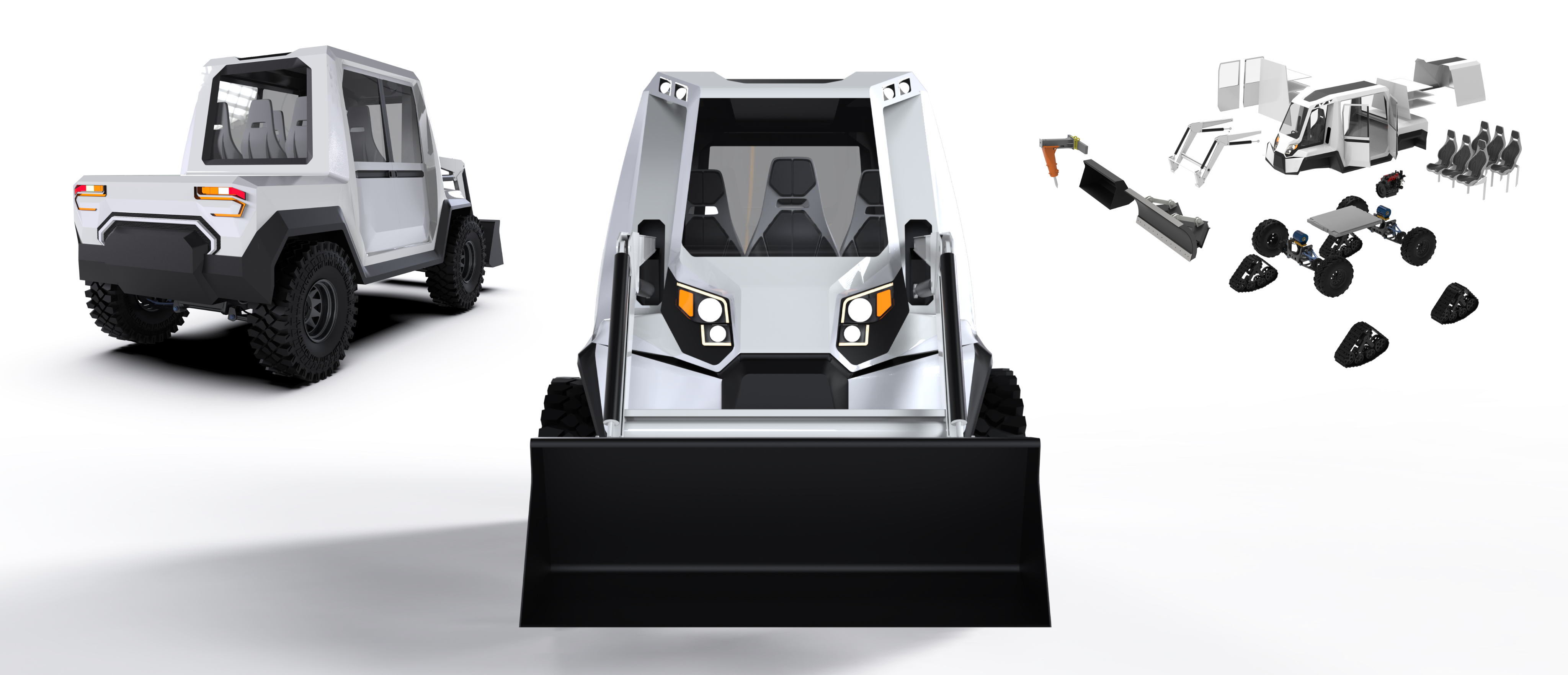
Get where you are needed
The initial concept seated six in the front cabin with an overhead crane and stabiliser legs. After advisory board review, the revised design moved the operator to a front-centre seat with lateral travel, opened the cabin for modular seating, and added enhanced lighting for low-visibility work.
Social
@alkin_gultekin
www.linkedin.com/in/alkın-gültekin-815220209
Current Locations
1040 Brussels
34710 Istanbul
16130 Bursa
Contact
+32 479079811
+90 5319246802
alkingultekin@gmail.com